


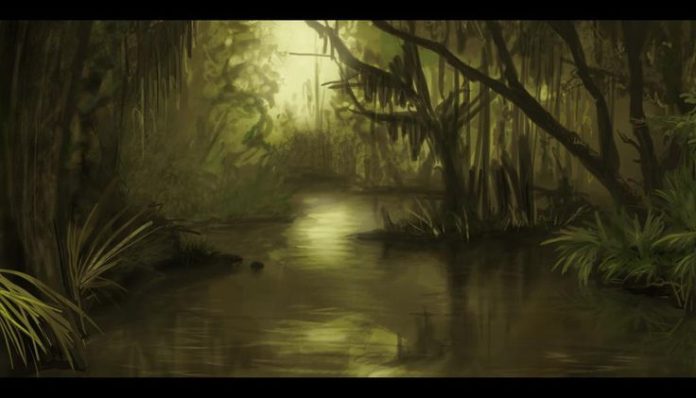
The damp air of Ambiguity, Mississippi, hung thick as a shroud, smelling of mud, cypress knees, and things that had died slow. Just past dusk, I found myself leaning against the battered wall of a juke joint, a weathered shack barely holding its shape beside the bayou. Inside, the night was heavy with smoke and the soulful wail of a blues guitar, but I slipped out back, drawn by the quiet beneath the low-hanging moon.
The night was almost too still, the kind of silence that presses on your skin. As I moved closer to the edge of the bayou, something strange caught my eye—white glimmers beneath the water. My breath hitched when I realized they weren’t just reflections. They were bones.
Slowly, I reached down, fingers trembling in the cold, damp night. These bones were old; I could tell by their sorrowful sheen, a reminder of stories long buried in the muddy depths. Who they belonged to, or how they came to rest here, I couldn’t say. But the air shifted then, a whisper riding the sticky breeze, as if the bayou itself was holding its breath.
I stepped back, heart pounding but filled with a strange kind of calm. Sometimes, in the quiet between the music and the smoke, you find things best left in the dark. Still, that night in Ambiguity, the bones whispered secrets—of loss, of waiting, and the slow, sure passage of time beneath the surface of things.