


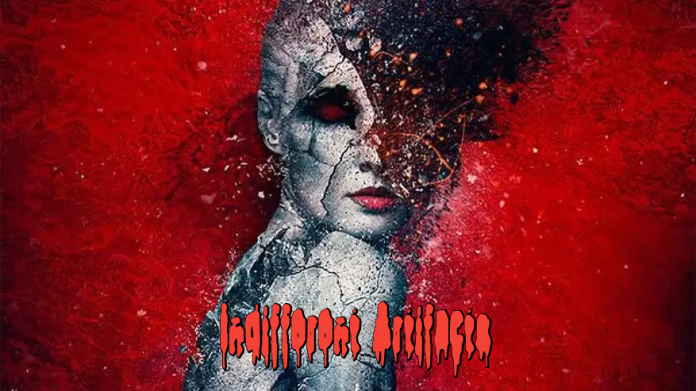
The air was not merely cold; it was saturated, a sodden, suffocating weight pressed down by the starless night. It hung thick with the scent of damp earth and decay—not the wholesome, fungal rot of a forest floor, but a heavier, clinging miasma, metallic and faintly sweet, like ancient pennies mixed with spoiled milk. It was the smell of dissolution in progress, a slow, inevitable surrender.
Adagio crouched in the shallow depression he had spent the last hour disturbing, his breath puffing white and immediately dissolving into the foul atmosphere. He was far from the paths, in the forgotten corner of the oldest cemetery lot, beneath the gnarled roots of a chestnut tree that had witnessed too much.
His spade had hit something dense, a resistance heavier than packed clay. Now, working with a small, careful trowel, he parted the final layer of sticky black soil.
Below, the earth was giving up its reluctant secrets, a silent offering illuminated by the narrow beam of his headlamp. There, curved against a matrix of root fibers and sludge, was a glimpse of something pale, an unnatural, shocking white. It was a curve of smooth carrion bone, clean and stark, exposed to the night’s chill. It was too dense for animal, too perfectly articulated for anything but the deep history of man.
Adagio did not flinch. He traced the smooth arc with the tip of his trowel, his movements reverent, almost surgical. He wasn’t a ghoul, nor a murderer returning to his crime. He was merely an addict of the inevitable, seeking the grim sustenance the living world refused to offer.
This was not sustenance for the body, not in the way the warm blood of life understood. Yet, a different hunger gnawed at him, sharp and demanding. A hunger for understanding, for the stories these silent, indifferent artifacts held. He felt the pull of the vacuum beneath the soil, the magnetic draw of absolute finality.
The morbid fascination was powerful, a strange, unsettling satisfaction that bypassed the heart and went straight to the mind. He felt the cold truth radiate from the exposed tibia, entering him like an intoxicant. It was a grim nourishment, a perfect, bitter meal.
He remembered Old Man Hemwick, the gravedigger who trained him briefly before Adagio fled the profession, only to find himself perpetually drawn back to the borders of the dead. Hemwick, spitting tobacco juice onto a freshly turned plot, used to mutter, “Good for the tummy.”
He wasn’t talking about the weak tea and stale bread they shared, but about confronting this exact scene: the exposed relic, the ultimate proof of fragile mortality. Hemwick insisted that facing dissolution head-on—swallowing the bitter realization that all warmth leads to this damp, cold dust—was the only way to find a dark sort of peace.
Tonight, under the indifferent, pinprick stars, the exposed bone felt less like a relic of death and more like the stark, honest truth of the universe stripped bare. It carried no judgment, no pain, just the fact of being finished.
Elias pulled his knees tight to his chest, the rough fabric of his canvas trousers scraping against the wet soil. The chill entered his bones, not from the air, but from the raw, cold presence beside him. He did not need to know whose bone it was, or how long it had rested there. The anonymity amplified the message.
The truth—heavy, unsettling, undeniable—settled deep within his gut. It was a profound, grounding weight, an anchor dropped into the deepest, darkest well of existence. It was the only thing that felt real, the only thing that truly satisfied the hunger. Adagio did not move, letting the decay-soaked air fill his lungs, absorbing the quiet, dreadful peace of the earth’s immutable honesty. He was fed. And the darkness, having offered its sermon, remained silent.





Your point of view caught my eye and was very interesting. Thanks. I have a question for you. https://accounts.binance.info/pt-PT/register-person?ref=KDN7HDOR